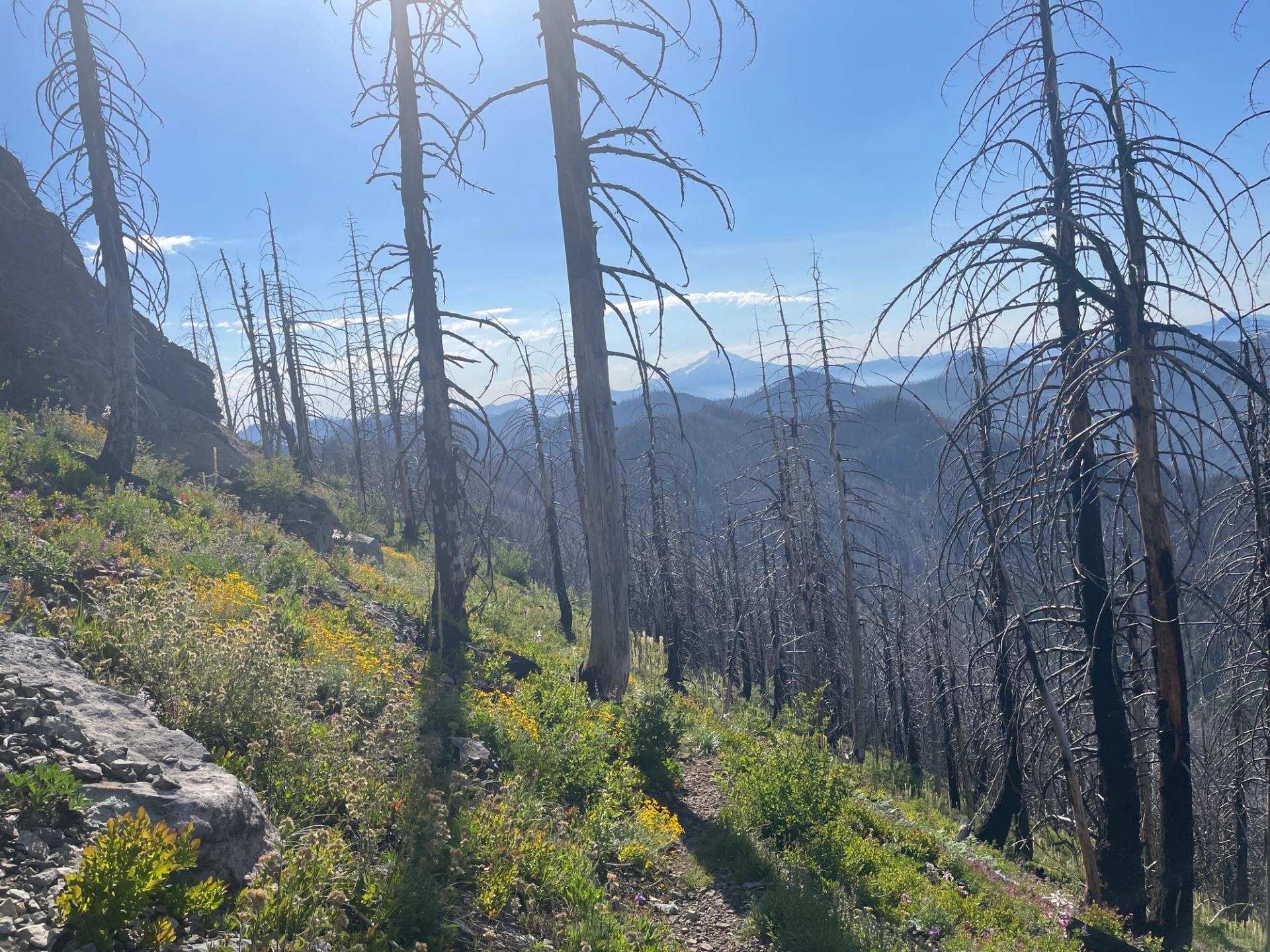
Across Oregon, forest fires have left trails of devastation in their wake. But after the fire, there is a rebirth of sorts.
On today’s City Cast Portland podcast, the Statesman Journal's Zach Urness talks about what to expect from the fire season ahead. But he also offered some of his recommendations for hikes to see the forest as it recovers.
“I recommend hiking in wildfire scars when you can,” he told City Cast Portland.
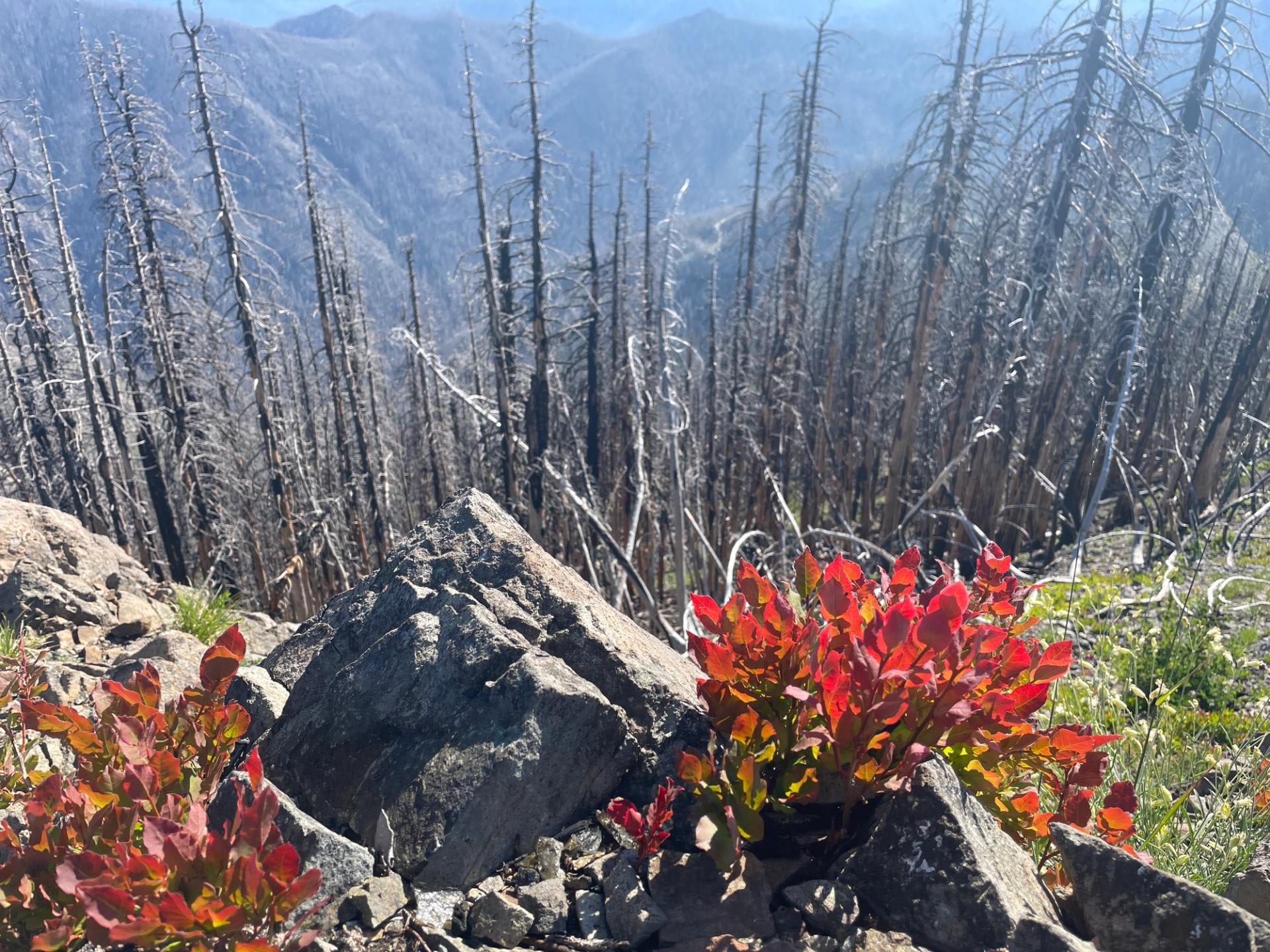
There’s just a hint of the recovery after the devastating Beachie Creek Fire. (John Notarianni/City Cast Portland)
“If you go up around the Detroit area, which had major fires, there's different trails that I could recommend, [but on] the Rocky Top Trail, which goes up right over the Opal Creek Valley, you can see just how powerful [the Beachie Creek] fire was.
“Fires burn at very different intensities. And you can see high-severity fire. It's kind of a wasteland. It's interesting, it's informative. It gives you a sense of the power of these fires.”
“That goes up through the Lionshead Fire scar, and it's totally different. It's what you would probably refer to as a ‘good fire.’ It burned at a much lower severity. The fire just got rid of all the brush and bramble and stuff that builds up along the forest floor, which is a big problem. It left most of the big trees intact. It took out some of the smaller ones.
“It's kind of beautiful. You have blackened ground, and you have an emerald forest canopy.”
“There's so many different ways to explore fire scars around the Mount Jefferson area, the B&B Complex [fires] from 2003 is there.
“It’s a legacy fire — [you can see] how does it look 20 years on, 25 years on, and what's regrowing there, what's not. You feel like a giant in the land of Lilliputians there because all the trees have grown up your waist. Fire's been resetting the landscape in the Cascades for a millennia. And so the forest does bounce back.”