|
| | Delays in Suicide Prevention at the St. Johns Bridge | Last year, up to 13 people died by suicide at a Portland river bridge; it was 11 the year before. “The limited data available and accounts from first responders suggest that the St. Johns Bridge appears to be among the most concerning for suicide,” the Oregonian reports. The Oregon Department of Transportation says that netting or barriers on bridges is too expensive. Oregonian reporter Isabel Funk has this story: [Oregonian] | - Help is available: If you or anyone you know is considering suicide, please call or text 988, or visit the 988 Lifeline website.
- Part of why: Officials haven’t wanted to draw attention to the issue, at least in part for public health reasons. Talk of suicide can lead to others. But also there is still stigma around suicide. Experts and advocates say there are still reasons to talk about the bridges and address the risk there. [Oregonian]
- An impulse that can be delayed: “If somebody in that wave of emotion has access to means, their risk of attempting increases,“ says Portland State University instructor Monica Parmley-Frutiger. Netting on bridges can help not only to delay an impulse, but “just because you showed people you cared,” says Kevin Hines, who attempted suicide at the Golden Gate Bridge at 19 and has spent his life trying to help address the issue. [Oregonian]
- A contrasting example in Portland: Barriers were installed on Northwest Portland’s Vista Bridge in 2013. “It was the best thing I’ve ever done,” says City Councilor Steve Novick, who in his previous tenure on City Council was responsible for the Vista Bridge changes. [Oregonian]
- Cost for the St. Johns Bridge: ODOT has estimated that netting for the St. Johns Bridge could cost upwards of $50 million and a fence could cost as much as $20 million. And that’s one bridge. Prioritizing which bridges need the barriers halted any planning as ODOT is facing shortfalls. [Oregonian]
|
|
|
|
| What Portland's Talking About |
| | 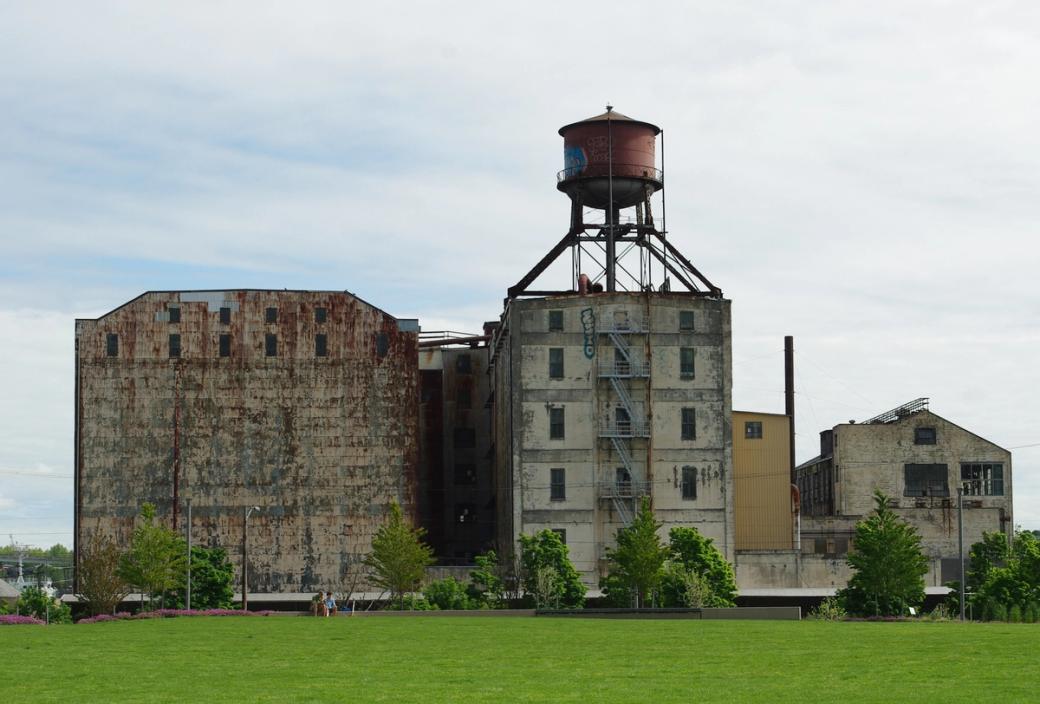 | Centennial Mills, pictured here in 2014, was demolished last month after the fire. (M.O. Stevens - Own work, CC BY-SA 3.0 / Wikimedia) |
| Squatters Were Living in Centennial Mills Before Fire | In the two months before the Aug. 2 fire at Centennial Mills, the city had cited property owner Stuart Lindquist for failing to secure the property. When responding to a medical emergency in June, Portland Fire & Rescue discovered 15 beds in the building as well as people living there. The city cited the owner again in July. Human remains were discovered after the fire, though it’s still not clear what caused the fire. [Oregonian] | | | Lincoln Statue Will Return at Full Height | Portland’s Abraham Lincoln statue will return to a pedestal like its old one — after vocal pushback and the threat of a lawsuit from preservationists. Lincoln was toppled in 2020 during an “Indigenous Day of Rage” — protesters targeted the statue for Lincoln’s role in executing 38 Dakota men in 1862. The city initially planned to bring the statue back but mount Lincoln closer to the ground — as a compromise between protesters and preservationists. But Mayor Keith Wilson has now reversed that plan. [Oregonian] | | PODCAST | Wednesday, September 16 |
| |  |
| PPS Recalls Half Their Laid-Off Teachers | Portland Public Schools recalled 43 of the 87 teachers laid off in June for full- and part-time positions. It’s not unusual for teachers to be recalled from layoffs. But it’s been a chaotic start to the school year with 27 substitute teachers covering classrooms. [City Cast Portland 🎧] |
|
|
|
|
🍴 The New York Times’ 2026 favorite restaurants: Two Oregon restaurants made the annual list of the nation’s most distinctive spots to dine: OK Chicken and Khao Soi — the Portland Thai restaurant that went into the old Pok Pok location — and Hayward, a restaurant in wine country that’s been in the national spotlight before with a James Beard nomination. |
| |
|
|
|


