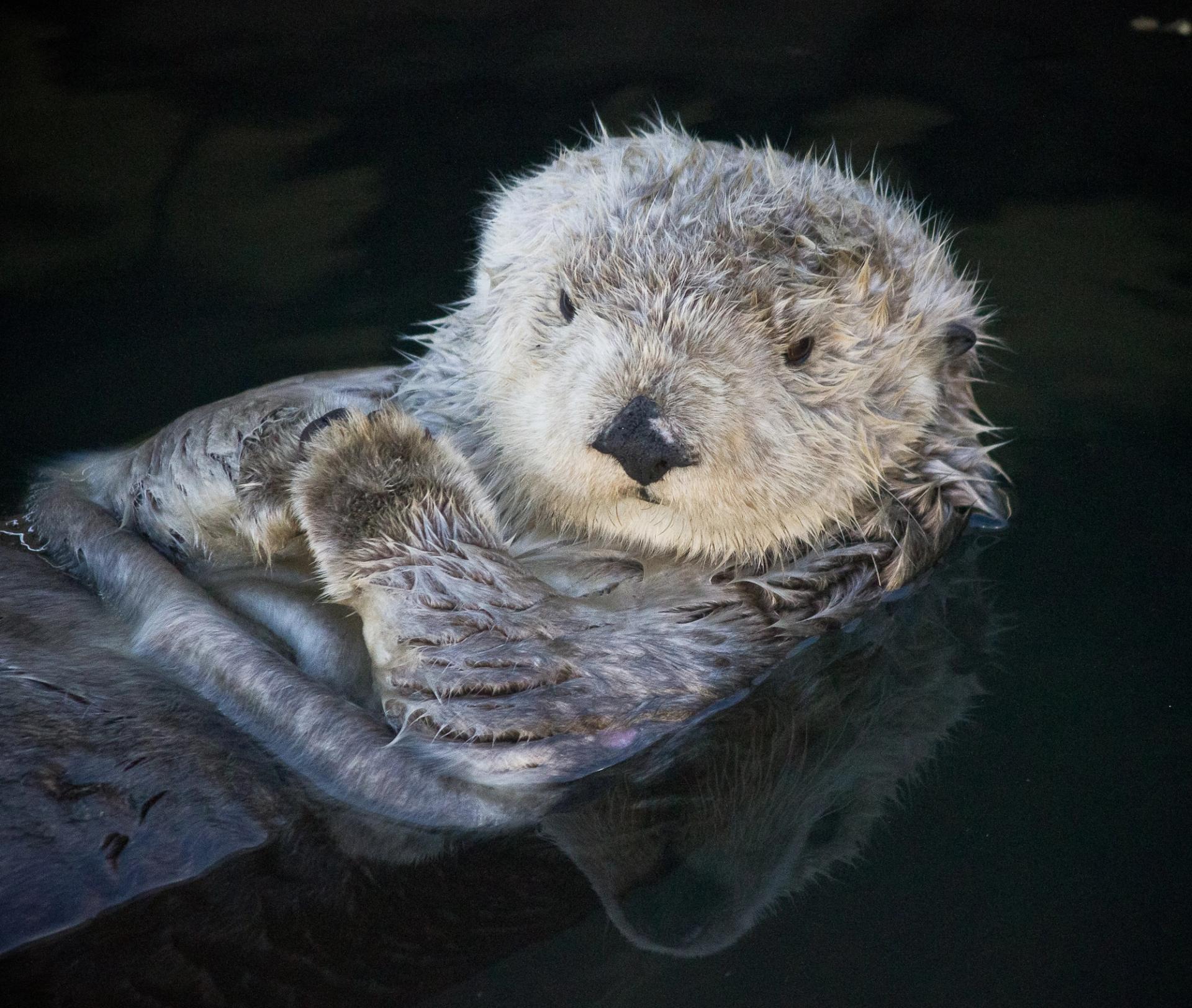
Fur traders killed the last of Oregon’s sea otters in 1906. But their return to the state may be imminent.
The U.S. Fish and Wildlife Service is preparing to reintroduce the species in Oregon and Northern California.
Sea otters once ranged from Japan across the Pacific Rim and down to Baja. The southern sea otter, which are now federally protected as a threatened species, is also known as the California sea otter; there are 3,000 in that state.
But in Oregon, you have to plan a visit to the aquarium or the zoo to see the likes of Juno, the basketball-dunking superstar, and others.
- Female sea otters weigh an average of 46 lbs; males, 64 lbs. That’s larger than you might think, but they are the smallest marine mammal.
- Sea otters do not have much body fat, unlike the blubber of many other marine mammals.
- Instead, they have an incredibly thick fur coat (which attracted their worst predators — aka human fur trappers). If contaminated by pollution (for example, petroleum spills), that coat can fail and lead to hypothermia.
- They also maintain a warm body temperature by eating a lot — roughly 25% of their body weight daily.
Among the foods these enthusiastic eaters savor are sea urchins. And their reintroduction now may help the larger ecosystem. The die-off of Oregon’s sea stars (also a sea urchin predator) has resulted in a 10,000% increase in purple sea urchins. More predators for sea urchins would mean fewer of them, which might help restore kelp growth and, in turn, help increase fish populations.
At the same time, sea otters may compete with the fishing industry for Dungeness crab and clams.