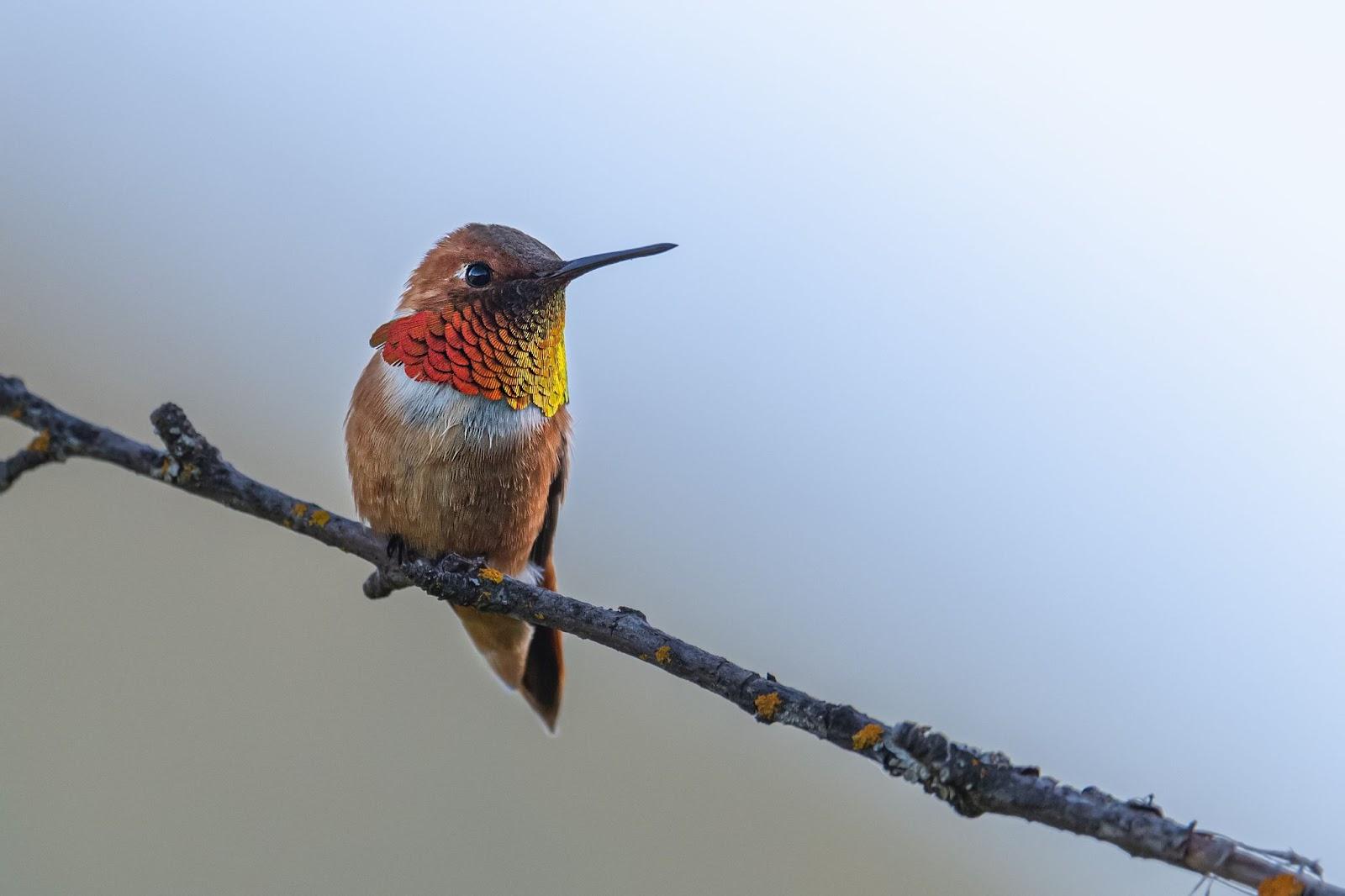
Rufous hummingbirds arrive back in town this month, for the summer. The tiny bird has among the longest migratory flights of any bird. They spend the winter in Mexico and come home to the Northwest to breed.
Named for Their Color 🐦
The male of the species has a distinctive shock of neon red-and-orange feathers on its throat, but the name “rufous” means reddish and refers to the rusty color on the back of both male and female birds.
Hungry or Ferocious? 🗡️
They weigh just a little more than a penny, and they are around 3 inches long. But they manage a migration of more than 2,000 miles, from the southern tip of Mexico to southern Alaska.
That’s the longest migratory path of any bird on earth, as measured in body lengths. The wee birds are excellent flyers. They maneuver with ease — in all directions.
And along their path, they have been known to defend even their temporary territory from other hummingbirds. It “isn't a sign of aggression but simply a natural instinct to protect vital food resources and ensure survival,” says the Bird Alliance of Oregon.
Rufous hummingbirds sip the equivalent of a third to a half their body weight in sugary nectar each day — as well as munch on flies, wasps, bees, and other insects for protein.
Other Resources:
- Anna’s hummingbirds are Portland’s other hummingbirds; unlike the Rufous hummingbird, they stick around all year.
- If you’re looking to attract these tiny bright birds to your yard, the Backyard Bird Shop has a recipe for nectar: Boil one cup of water for two minutes, stirring in a quarter cup of sugar. (Don’t use honey because it can result in a fungal infection, and you can store the solution in the refrigerator for up to two weeks.)