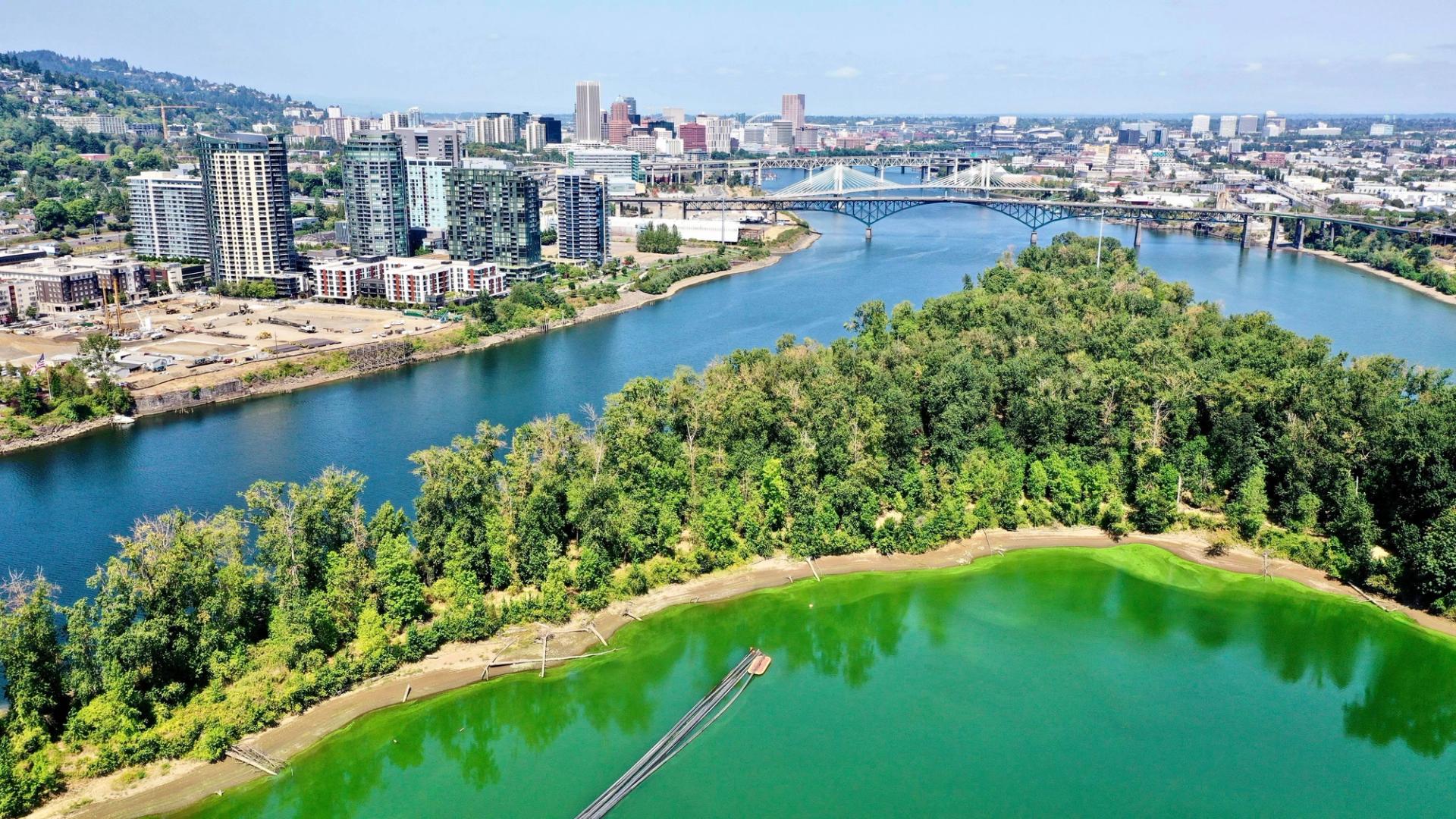
A hundred years ago, the city of Portland shut the Willamette River to swimming. The safety concerns at the time were toxic chemicals from paper mills, raw sewage, and blood and guts from fish processors.
Now the river is safe to swim in — at least for most of the year. But one key threat to swimmers (and dogs) persists: toxic algal blooms that often happen when the weather gets hot.
Since 2017, Willie Levenson, from the river advocacy group Human Access Project, has been working on a project to fix the river’s cyanobacteria blooms problem. He talked about the Willamette’s human-made algae problem:
What causes this toxic water?
“Three things cause cyanobacteria blooms or harmful algae: slow moving water, warm water, and excess nutrients. In the case of the Ross Island Lagoon, it's a 140-acre stagnant pond inside of our river. It's a harmful cyanobacteria bacteria bloom factory.”
What’s at stake?
“The blooms are dangerous because they can kill dogs and make people sick. If water is ingested, it's a big deal.
“Until we get this fixed, we'll have summers with shorter swim seasons or no swim season at all. For now, we can typically feel safe about swimming through July."
What was your reaction to finding out about the algae problem?
“It really threw me for a loop because I never went into this expecting to be a Harmful Algae Bloom Warrior, which is the position I feel like I'm in now. But it's really important.”
More resources: The city provides ongoing updates on water quality.