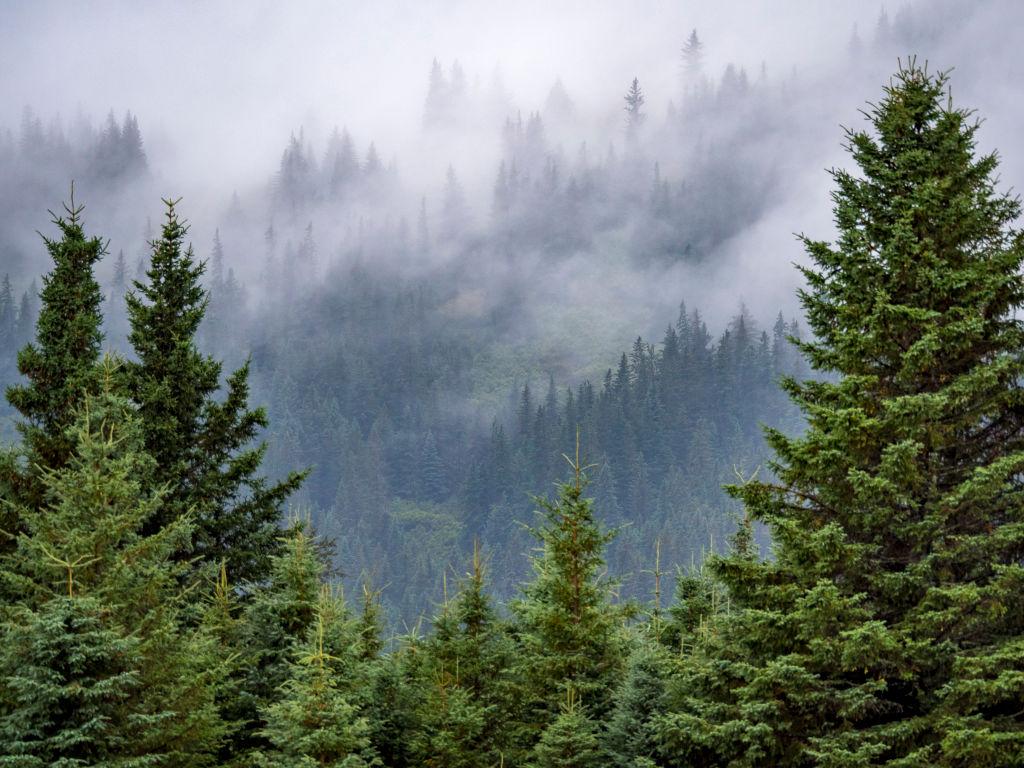
The eponymous David Douglas died at the ripe old age of 34. A stone mason’s son who left school at age 11, he loved animals, plants, and the whole natural world, it seems. He made his way to the Pacific Coast to gather plant samples and seeds for rich people’s gardens in the British Isles. Thank you to the reader who sent me the link to a documentary on his life.
- The Douglas fir tree, once known as the Oregon pine, has been the state tree since 1936.
- Its cones are recognizable from the mouse-tail-shaped protrusions.
- But the thing is, the Douglas fir is not really a fir tree. I learned that recently from a story about “firmagedon,” which became a national issue; the Doug fir hasn’t been as affected in the massive die-off of actual fir trees in Oregon. There’s a long and complicated history of how the tree came to be named, both scientifically and commonly.
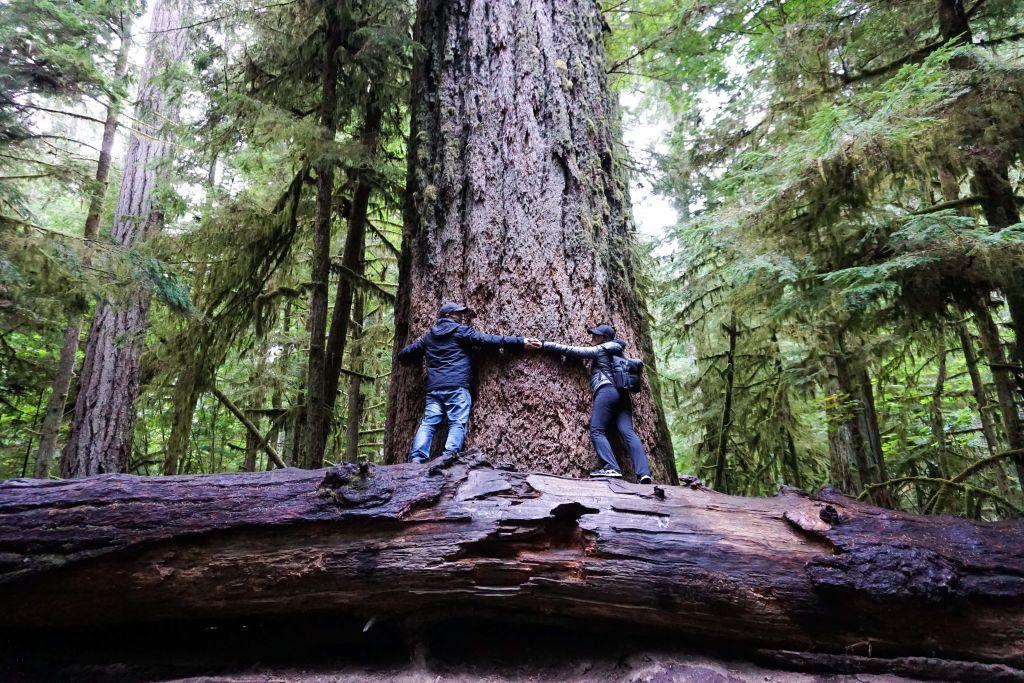
The Douglas fir tree isn't a proper fir, but it may be the most common tree in Oregon. (Getty Images/VW Pics/Contributor)
- Some trees grow to 200 feet tall.
- The biggest of the Pacific Coast Douglas firs is in Coos County, Oregon. It even has its own name: Doener Fir.
- The Douglas fir is a workhorse of a tree. Says the Oregon Encyclopedia: “No tree in the world produces more wood products for human use. Its strong, relatively dense wood is used to produce large timber beams, boards, railroad ties, plywood veneer, and wood fiber for paper manufacture.”
- David Douglas’ name also was given to the Douglas squirrel that likes to eat Douglas fir cones’ seeds and, of course, to one Portland school district.