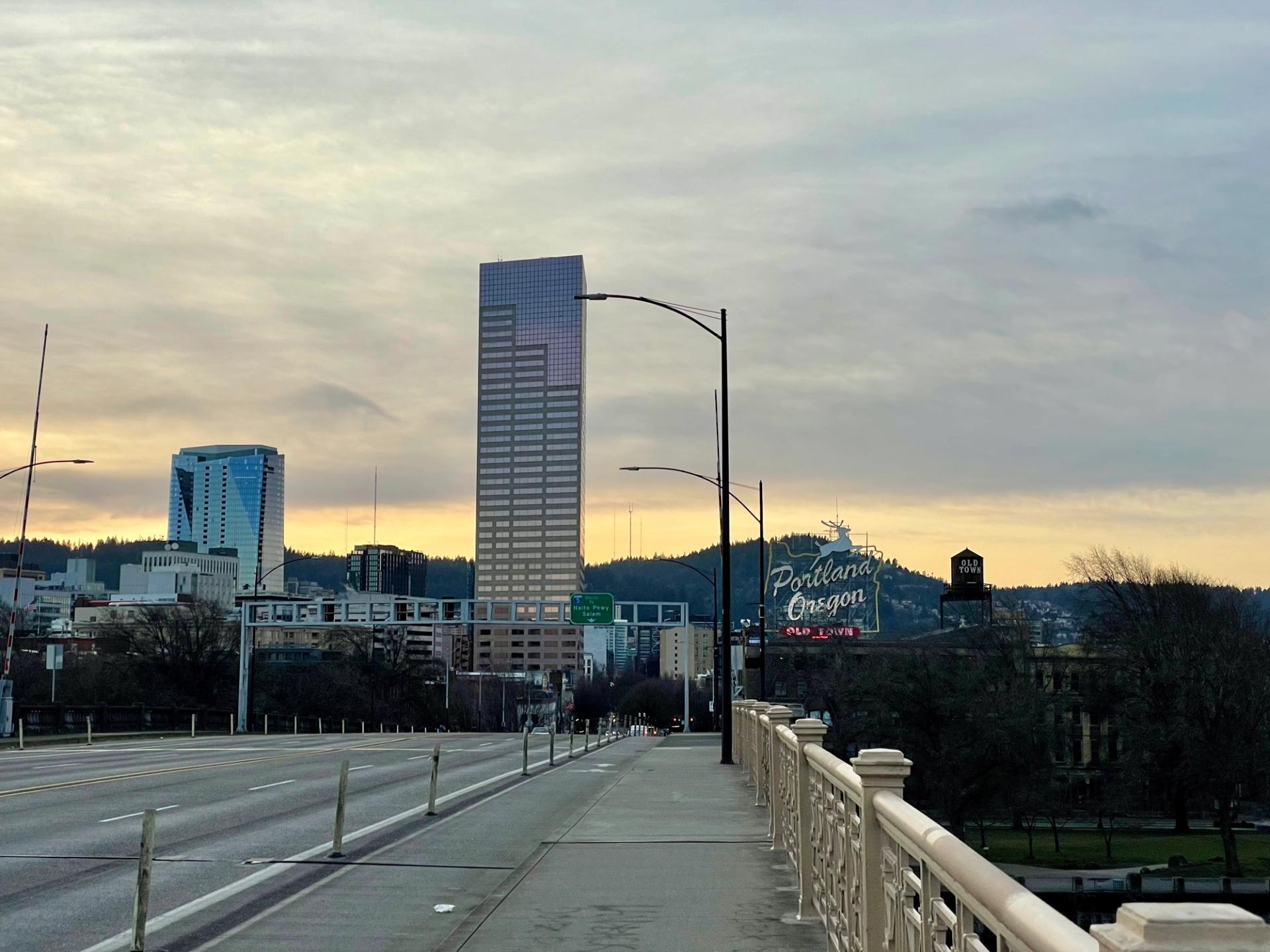
Starting in 2028, the Burnside Bridge is slated to close for a lengthy construction project that’ll give the bridge a seismic upgrade. That’ll have a major impact on commuters — and also the business and residents on the West Side.
A group of urban planning students, with guidance from Better Block PDX managing director Ryan Hashegan, are thinking about the opportunity that creates for the stretch of West Burnside from I-405 to the river — and what improvements should be considered for when the bridge reopens five years later.
Here’s how Hashegan explains the opportunity presented by the bridge closing:
What’s West Burnside like now?
“Right now, Burnside is seen as a barrier. It is a psychological barrier; it's a physical barrier. It's also a high-crash corridor.
“ Burnside is used as a major traffic arterial. It is a major emergency-response route. It goes back in history as being a farm-to-market route…. That's why it is essentially our base zero avenue dividing the city north and south. At the same time, Burnside divides … our city culturally and socially.”
What are some ideas for what should happen when the bridge closes?
“One thing that people are universally agreeing on is how to make Burnside safer for crossing and how to bring the two sides of the neighborhood together.… Some of the ideas include establishing a night market.”
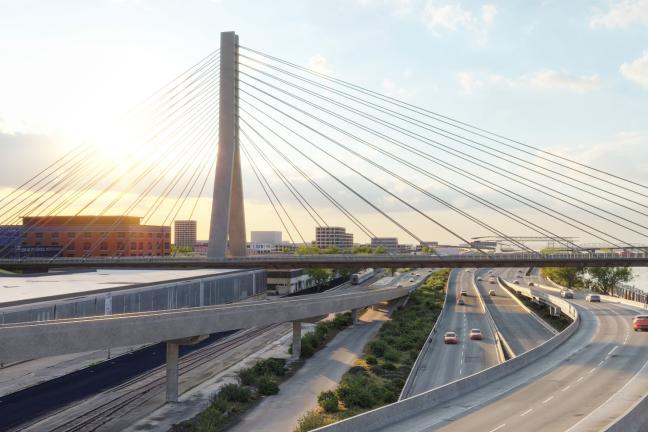
Construction is slated to begin in 2028 for a redesigned Burnside Bridge. (Multnomah County)
What changes would stay once the bridge reopens?
”We are not proposing a car-free bridge there. But what we are hoping for is a space that can … be more accessible to people on foot.
“Burnside could be an iconic place…. Some of our key iconic landmarks — from Powell's Bookstore to Voodoo Donuts to Saturday Market — are all along that Burnside corridor. So our goal for the future is to embrace Burnside as a signature street — a destination versus just a thoroughfare to get traffic through.”
Join the Bridgeless to Better Burnside Workshop on Tuesday, May 6 at the JK Gill Building. More information here.