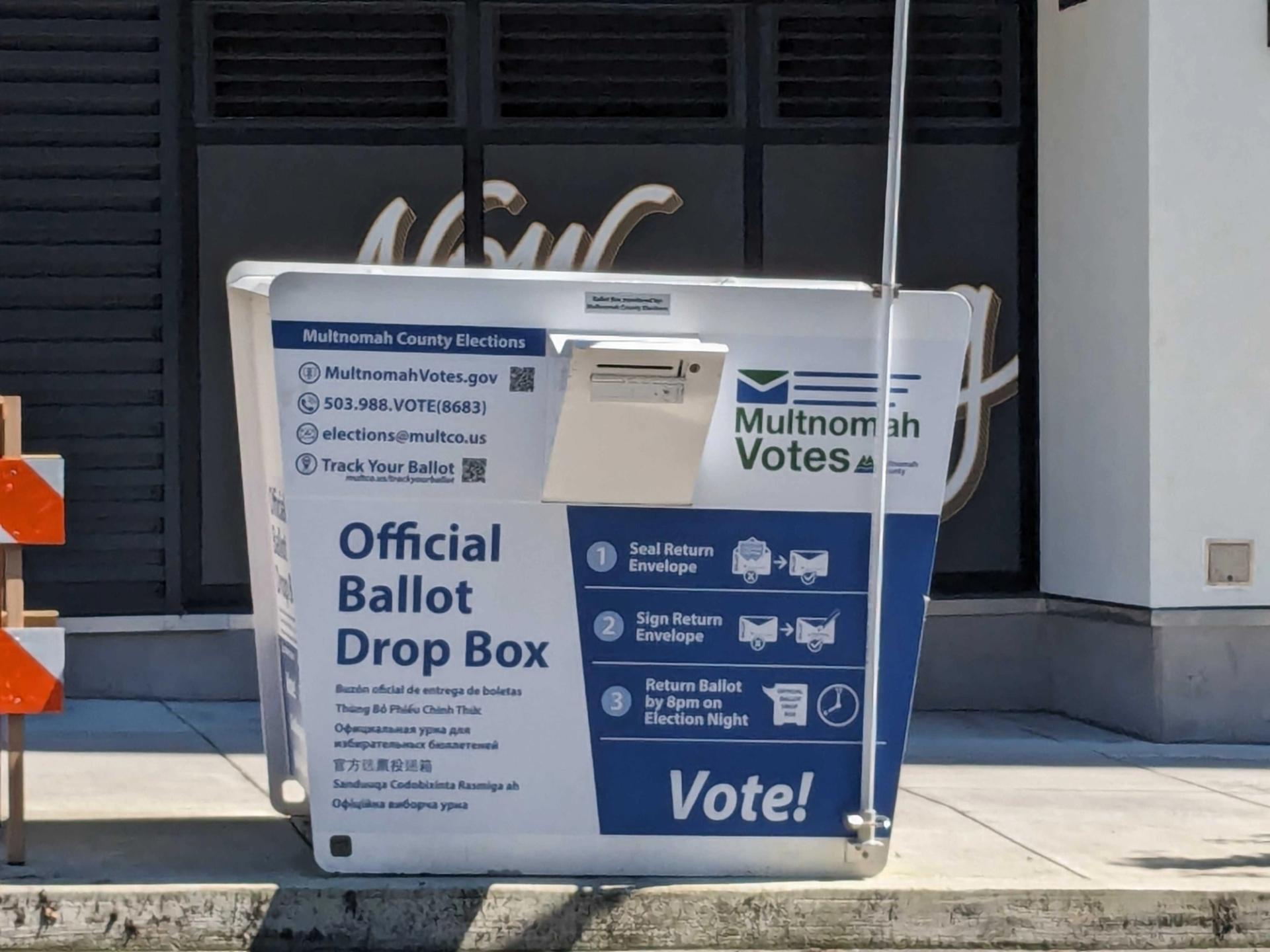
We’re closing in on Election Day 2024, and starting today, we're running a guide to what the key races are and how to vote in the Portland area. Be sure to check back here as Election Day approaches: we'll be adding fresh content right up until November 5!
Table of Contents
U.S. Congress
There’s a lot of focus on the presidential election, which hangs in the balance — on razor-thin margins in half a dozen swing states. Not here.
In the Portland metro area, there are still local races that will have a key impact on national politics. Republicans and Democrats are fighting for control ofCongress, with money pouring in from the national parties. The U.S. Senate is expected to flip from a Democratic to a Republican majority. But the fight to control the U.S. House of Representatives is hard-fought: 26 races are considered tossups, with one right here in Oregon.
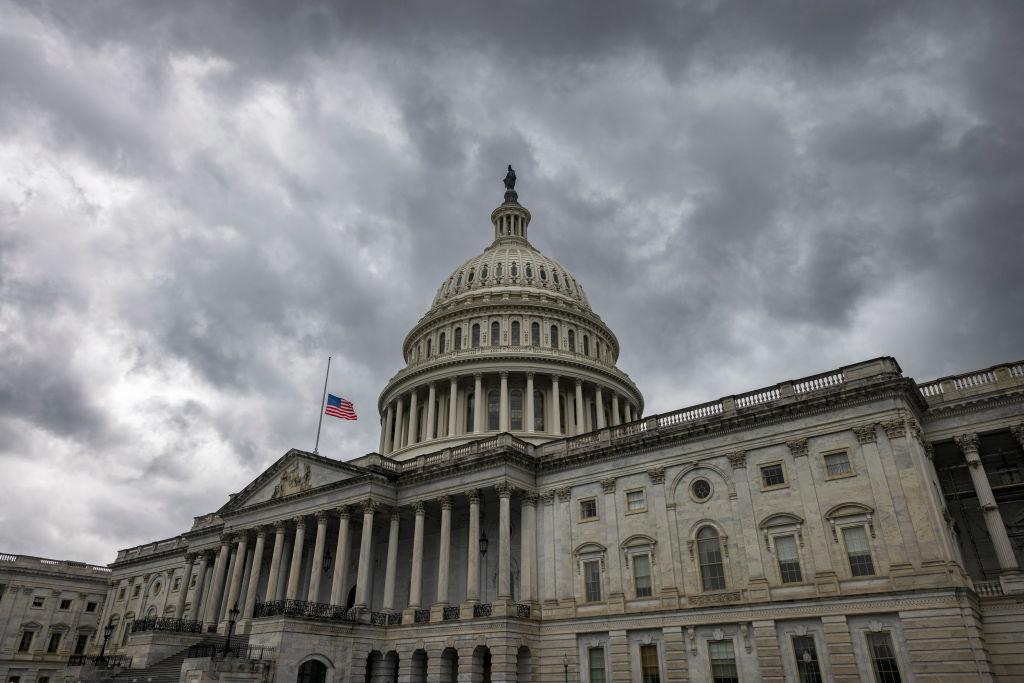
Oregon’s role in the future of Congress. (Samuel Corum / Stringer / Getty Images)
Oregon’s District 5
The district which runs from Portland’s Sellwood neighborhood to the city of Bend is one of the few Republican-held seats where Biden won in 2020. In her first term in Congress, Republican Chavez-DeRemer has tried to tread a moderate path. But at the same time, she’s endorsed former President Donald Trump.
🗳️ Who’s on the Ballot
- 🟥 U.S. Rep. Lori Chavez-DeRemer, the Republican incumbent
- 🟦 State Rep. Janelle Bynum, the Democratic challenger
🗞️ Inside Scoop
Bynum defeated Chavez-DeRemer in two races for the Oregon House, but this district covers a different geographic area. Bynum is criticizing Chavez-DeRemer’s support for a national abortion ban during her last campaign, while Chavez-DeRemer is attacking Bynum for her support of legislation to hold police accountable.
📖 Further reading:
- “Is there room for a non-MAGA Republican in Trump’s GOP?” [LA Times]
- “Oregon’s most consequential race for Congress draws national attention” [Oregonian]
- There are a series of issues affecting the district, including the urban-rural divide, wildfires, and housing. [OPB]
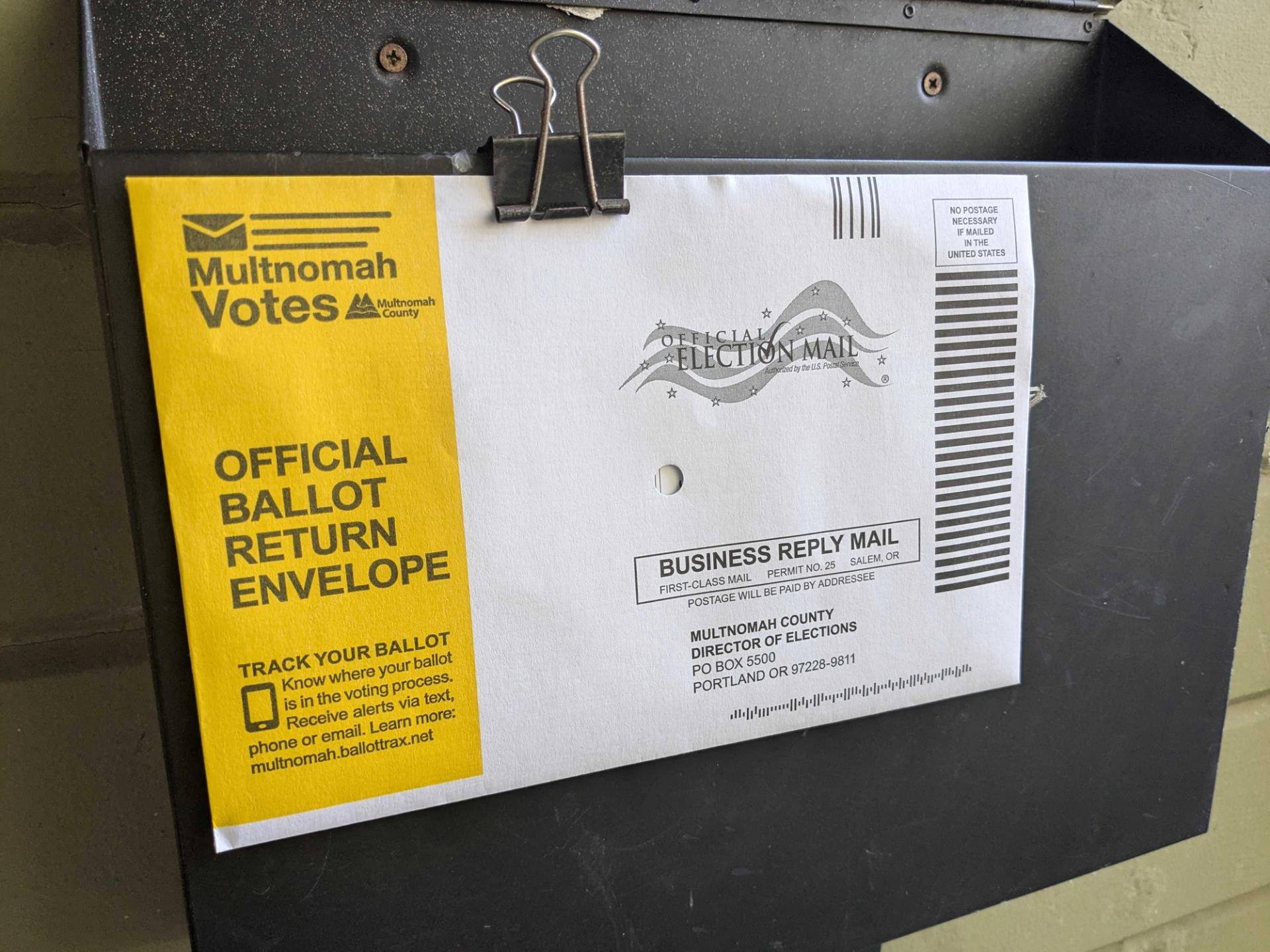
Do you have your ballot? (Rachel Monahan / City Cast Portland)
Multnomah County Commissioners
Two runoffs from the May primary will decide the future direction of the Multnomah County Board of Commissioners. The county holds nonpartisan elections, with a fall runoff for any race where the leading candidate didn’t get a majority of the votes (50% plus one).
District 1
Multnomah County District 1 covers the city’s West Side, along with a portion of inner Southeast. The term-limited outgoing commissioner Sharon Meieran has criticized the two county chairs she’s served with, pushing for more urgency on addressing homelessness. That’s an issue of note in this fall’s election:
🗳️ Who’s on the Ballot
🗞️ Read more:
The candidates have policy distinctions on civil commitments, arresting homeless campers, and cutting taxes, among other issues. [Oregonian 🔒]
District 2
District 2 covers most of North and Northeast Portland. Former commissioner Susheela Jayapal resigned to pursue an unsuccessful bid for Congress. The winner of this election will serve out the remainder of her term that ends in 2026.
🗳️ Who’s on Your Ballot
- Sam Adams, former Portland mayor
- Shannon Singleton, former adviser to Gov. Kate Brown and former interim director of the Joint Office of Homeless Services
🗞️ Read more:
- A debate between Adams and Singleton highlighted their policy differences on homelessness. [Oregonian 🔒]
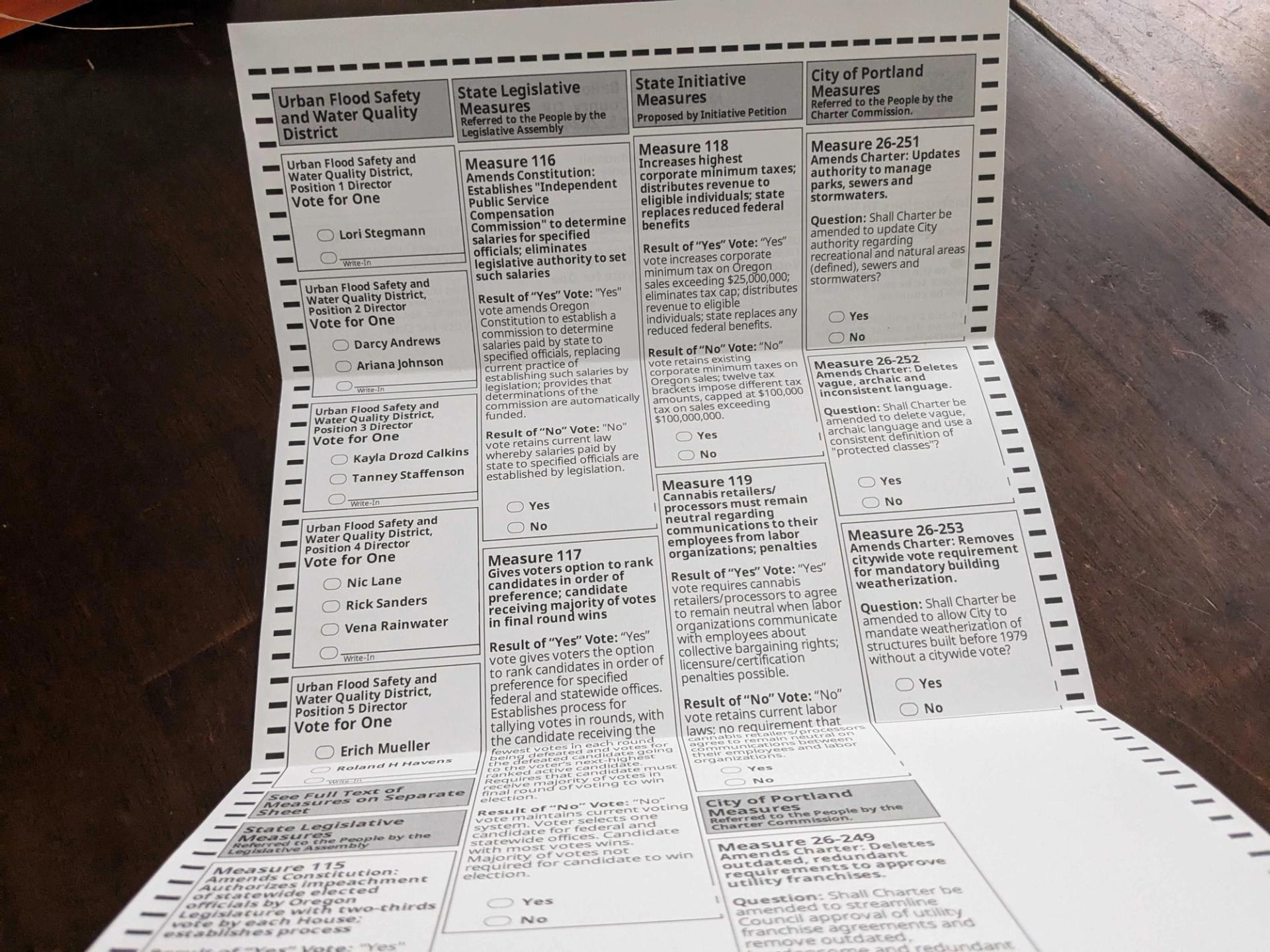
What else is on the ballot? (Rachel Monahan / City Cast Portland)
Statewide Ballot Initiatives
It’s not just candidates on the ballot this November; there’s a slew of statewide policy choices for voters to make this fall:
Measure 115: Impeachment
🗳️ What’s on the Ballot
✅ A yes vote for this measure would allow the state Legislature to impeach and remove the governor, the secretary of state, the state treasurer, the attorney general, and the Bureau of Labor and Industries commissioner.
❌ A no vote would keep things as is.
🗞️ Inside Scoop
Oregon has had its fair share of top electeds engulfed by scandal — most notably, Secretary of State Shemia Fagan and Governor John Kitzhaber. They both resigned. If they hadn’t, it would have required a recall election to remove them.
📖 Further reading:
- Oregon Capitol Chronicle’s explainer on Measure 115.
Measure 116: State Elected Salaries
🗳️ What’s on the Ballot
✅ A yes vote would create an independent commission to set salaries for state elected officials.
❌ A no vote would not.
🗞️ Inside Scoop
There’s a good deal of support for raising state elected officials’ salaries — or at least considering the matter. There is currently no organized opposition, though editorial boards have opposed it, including the Oregonian and Willamette Week, who criticize this measure for failing to require a nonpartisan or bipartisan commission, as well as preventing the legislature from reviewing the results of the commission’s work.
📖 Further reading:
- The independent commission to decide state electeds’ salaries. [OPB]
Measure 117: Ranked-Choice Voting
🗳️ What’s on the Ballot
✅ A yes vote would bring ranked-choice voting statewide by 2028.
❌ A no vote would keep the system as is.
🗞️ Inside Scoop
Portland and Multnomah County have already passed ranked-choice voting, as has Benson County. Advocates say ranked-choice voting makes sure every vote counts. But there is notable opposition from county elections clerks from around the state, who argue it will be costly to implement and create confusion for voters.
📖 Further reading:
- The measure to bring ranked-choice voting statewide. [OPB]
Measure 118: Oregon Rebate
🗳️ What’s on the Ballot
✅ A yes vote would give almost every Oregonian a yearly tax rebate of $1,600.
❌ A no vote would not.
🗞️ Inside Scoop
A passel of groups, including progressives, have lined up to oppose this version of universal basic income, in part citing unintended consequences of sapping the state’s general fund and eliminating federal social service benefits for low-income people. Business groups and others also oppose the funding mechanism: a gross receipts tax.
📖 Further reading:
Measure 119: Cannabis Worker Unionization
🗳️ What’s on the Ballot
✅ A yes vote would require cannabis businesses applying for a state license to sign a labor peace agreement, meaning they would agree not to interfere in unionization efforts at their shops.
❌ A no vote would not.
📖 Further reading:
For more on local measures: Check out the Oregonian’s story on the metro-area school districts asking voters for money: Parkrose, Tigard-Tualatin, and Oregon City want support for buildings and teachers.
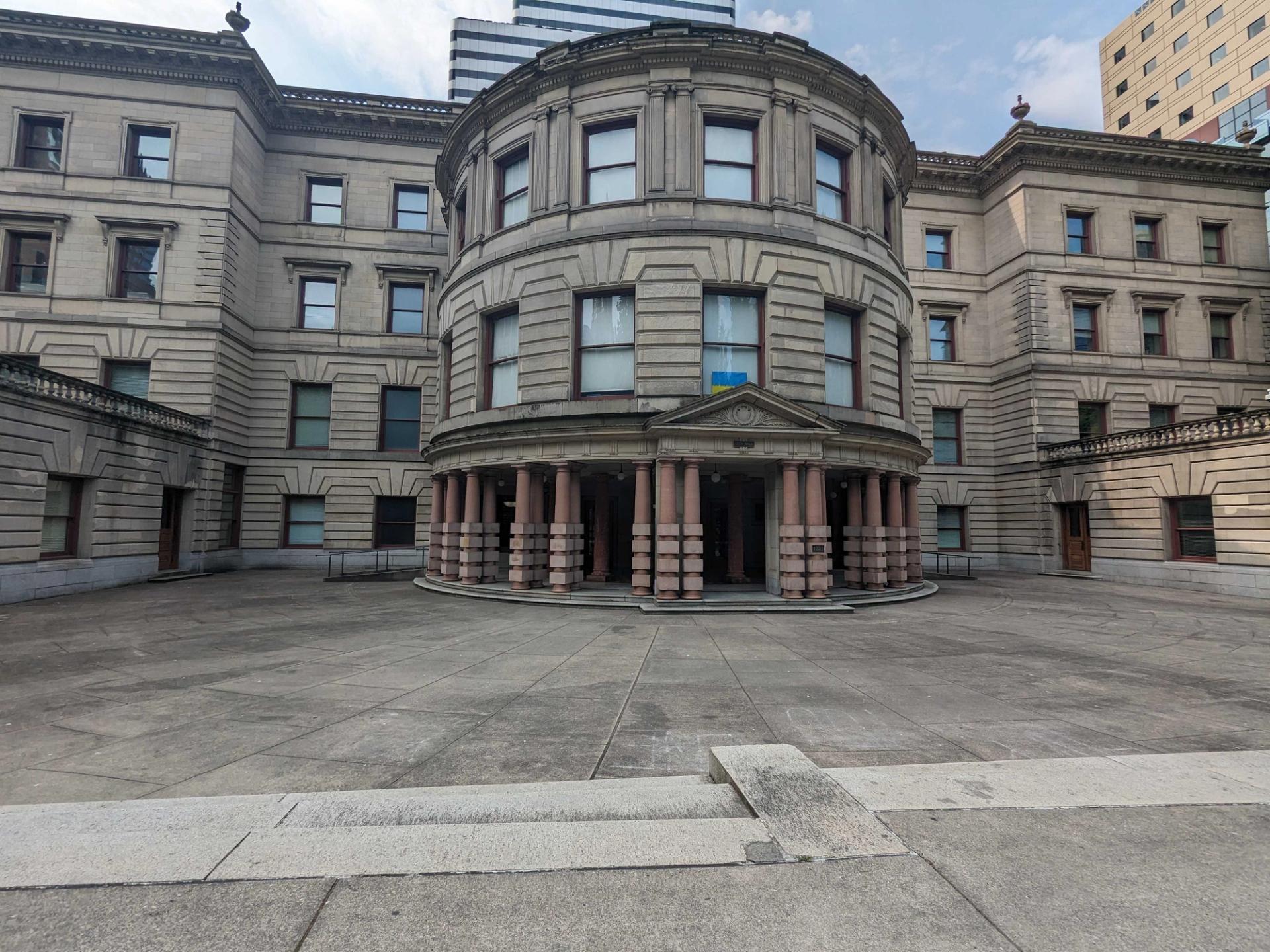
Deciding the future of Portland. (Rachel Monahan / City Cast Portland)
Portland City Hall: Mayor
For the first time in two decades, Portland broke its streak of one-term mayors in 2020. But after two terms, Mayor Ted Wheeler is now stepping down — and with him will go the old version of the job. Portland will be not just electing a new mayor, but also a person with new responsibilities: instead of a seat on the City Council, the next mayor’s job will involve administering all the city agencies, first and foremost by hiring a professional city administrator.
Here are the leading candidates for Portland mayor. (They were the five who qualified for $100,000 in matching funds from the city’s Small Donor Elections program.) As with the county commission, it’s a nonpartisan race.
🗳️ Who’s on the Ballot?
🗞️ Further reading:
- Gonzalez has led the race for much of the summer, with a strong message about public safety. [Oregonian 🔒]
- Will traffic tickets upend the Portland mayor's race? Spoiler: The answer is maybe. [Hey Portland]
- This is the first time Portland will use ranked choice voting. And it could have a major impact on who wins: Wilson is currently leading in the polling. [Oregonian 🔒]
🎧 Further listening (from the City Cast Portland podcast):
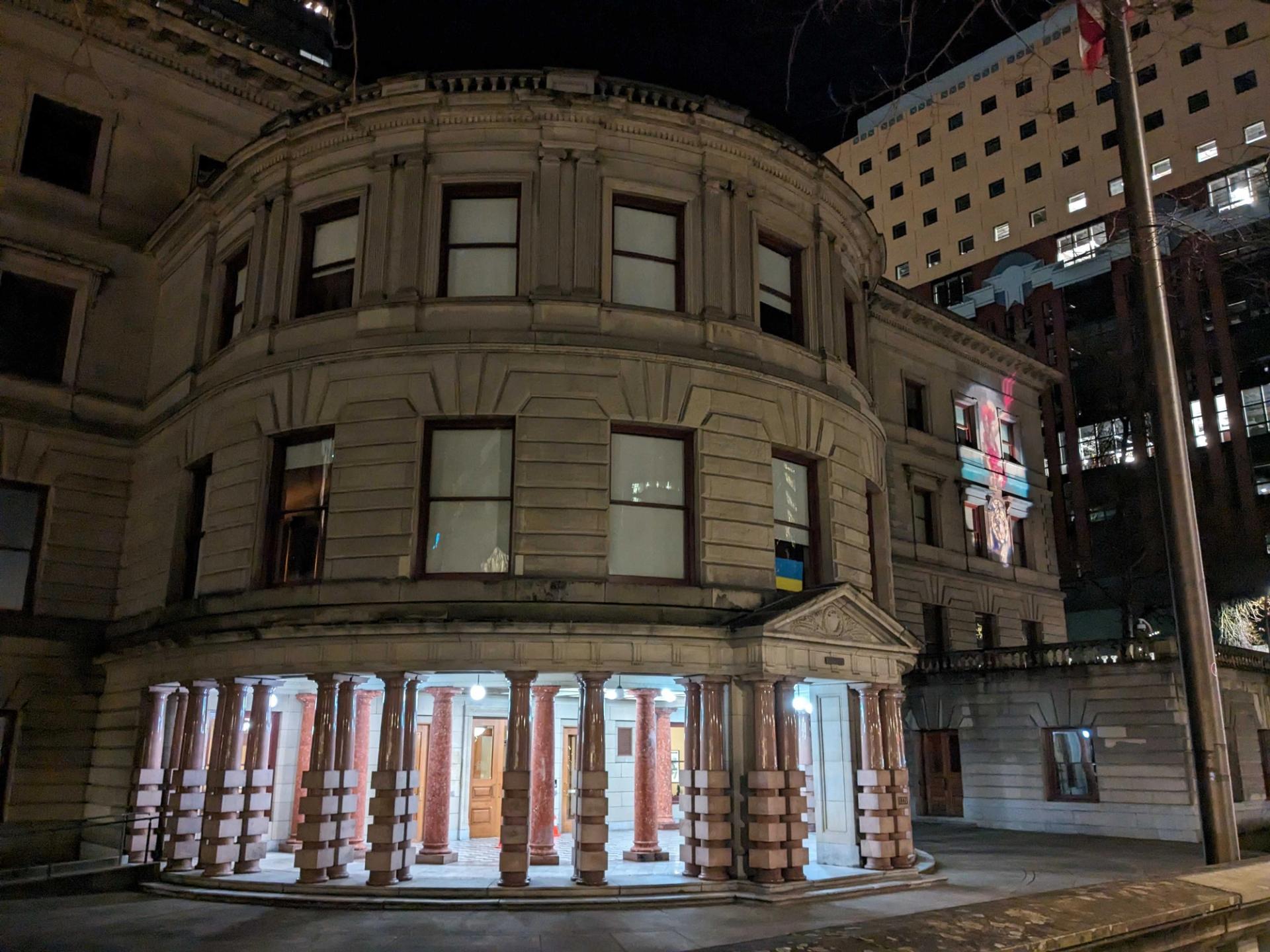
City Hall during the Winter Lights Festival, 2024. (Rachel Monahan / City Cast Portland)
Portland City Hall: District 1
Long-neglected and underrepresented, East Portland was a key inspiration for the city’s change of government that’s now underway. On Election Day — just eight days away — East Portland voters will pick three candidates to represent their interests at City Hall for the first time. Geographic representation (with three City Councilors from each of the city’s four new districts) is a particularly dramatic change for District 1: In more than 30 years, just two members of City Council have lived east of 82nd Avenue.
District 1 voters may be particularly focused on picking candidates who are good at getting things done — rather than for their political ideologies.
“Both a challenge and a promise for these candidates is that they’re probably dealing with some of the most disillusioned voters,” Maja Viklands Harris, from the voter education nonprofit Rose City Reform, tells the City Cast Portland podcast.
But candidates can also be distinguished by their views, which skew to the left like most of Portland, but range from progressive to moderate, notes Viklands Harris. (Endorsements are a good way of distinguishing them on that scale.)
In this nonpartisan race, these are the seven candidates who qualified for the city’s campaign donation matches (listed in order of the number of contributions, as of Oct. 25):
🗳️ Who’s on the ballot:
(1,760 contributions)
Transportation and sustainability advocate
🥇 Sample endorsements:
- Organizations: NW Oregon Labor Council, Basic Rights Oregon, APANO [Rose City Reform]
- Newspapers: Willamette Week
🗞️ Further reading:
(1,249 contributions)
Executive director of environmental advocacy nonprofit Verde
🥇 Sample endorsements:
- Organizations: NW Oregon Labor Council, Basic Rights Oregon, APANO [Rose City Reform]
- Newspapers: Portland Mercury, Oregonian, Willamette Week
🗞️ Further reading:
(1,056 contributions)
Attorney and urban planning professional
🥇 Sample endorsements:
- Organizations: IBEW Local 48, APANO, Sierra Club [Rose City Reform]
- Newspapers: Portland Mercury
🗞️ Further reading:
(953 contributions)
MusicPortland board member and former City Hall staffer
🥇 Sample endorsements:
- Organizations: Columbia Pacific Building and Construction Trades Council, Sierra Club, Moms Demand Action [Rose City Reform]
- Newspapers: Willamette Week
🗞️ Further reading:
(620 contributions)
President of the graffiti removal company Restore Nuisance Abatement
🥇 Sample endorsements:
- Organizations: Portland Police Association, Portland Metropolitan Association of Realtors, Multnomah County Republican Party [Rose City Reform]
- Newspapers: Oregonian
🗞️ Further reading:
(427 contributions)
former Multnomah County commissioner
🥇 Sample endorsements:
- Organizations: Portland Police Association, Multifamily NW, Portland Metropolitan Association of Realtors [Rose City Reform]
🗞️ Further reading:
(407 contributions)
Superintendent and in-house counsel for the taxi company Radio Cab
🥇 Sample endorsements:
- Organizations: Multnomah County Deputy Sheriffs Association, Portland Metropolitan Association of Realtors, Multnomah County Republican Party [Rose City Reform]
- Newspapers: Oregonian
🗞️ Further reading:
Who will represent North Portland? (Rachel Monahan / City Cast Portland)
Portland City Hall: District 2
The race for District 2, which encompasses all of North Portland as well as most of inner Northeast, is between progressives and centrists. Public safety is high on the list of issues that the candidates are focusing on as they face heavy competition for these three City Council seats. With 22 people in the running, voters have an abundance of qualified candidates to choose from.
In this nonpartisan race, these are the top-seven candidates by number of contributions, as of Oct. 28:
🗳️ Who’s on the Ballot
🟢 Nat West
(1,447 contributions)
Former cidermaker
🥇 Sample endorsements:
- Organizations: SEIU Local 49, Sierra Club, Latino Network Action Fund [Rose City Reform]
- Newspapers: Oregonian
🗞️ Further reading:
🟢 Dan Ryan
(1,033 contributions)
Portland city commissioner
🥇 Sample endorsements:
- Organizations: NW Oregon Labor Council, Multifamily NW, Portland Police Association [Rose City Reform]
- Newspapers: Oregonian, Willamette Week
🗞️ Further reading:
(1,010 contributions)
Political organizer and advocate
🥇 Sample endorsements:
- Organizations: Portland Association of Teachers, Portland Metropolitan Association of Realtors, Friends of Portland Street Response [Rose City Reform]
🗞️ Further reading:
(946 contributions)
Policy manager at the City of Portland’s Public Safety Service Area
🥇 Sample endorsements:
- Organizations: AFT Oregon, APANO, Friends of Portland Street Response [Rose City Reform]
- Newspapers: Portland Mercury
🗞️ Further reading:
(816 contributions)
Senior communications specialist at Oregon Health and Science University
🥇 Sample endorsements:
- Organizations: UFCW 555, Home Building Association of Greater Portland, 12 For PDX [Rose City Reform]
🗞️ Further reading:
(751 contributions)
People and culture manager at the City of Portland
🥇 Sample endorsements:
- Organizations: Portland Police Association, SEIU Oregon, NAYA Action Fund [Rose City Reform]
- Newspapers: Oregonian
🗞️ Further reading:
(728 contributions)
Director of Multnomah County’s Bienestar de la Familia program
🥇Sample endorsements:
- Organizations: American Council for Palestine, Street Trust Action Fund [Rose City Reform]
🗞️ Further reading:
Welcome to the East Side. (Rachel Monahan / City Cast Portland)
Portland City Hall: District 3
District 3 in Southeast Portland has 30 candidates in the running, and many of them are staking out similar positions. In the most left-leaning area of the city, the question becomes which brand of progressive bona fides will win the day.
Here are the top seven candidates by number of contributions (as of Nov. 1):
🗳️ Who’s on the ballot
(2,527 contributions)
Public school teacher and union organizer for the Portland Association of Teachers
🥇 Sample endorsements:
- Organizations: Portland Association of Teachers, Basic Rights Oregon, APANO [Rose City Reform]
- Newspapers: Portland Mercury
🗞️ Further reading:
(1,904 contributions)
Policy advocate for the nonprofit Partners for a Hunger-Free Oregon and former City Hall staffer
🥇 Sample endorsements:
- Organizations: SEIU Local 49, Latino Network Action Fund, Friends of Portland Street Response [Rose City Reform]
- Newspapers: Portland Mercury
🗞️ Further reading:
(1,154 contributions)
Interim policy director for the addiction recovery network Oregon Recovers and former staffer for elected officials
🥇 Sample endorsements:
- Organizations: Portland Association of Teachers, Portland Metropolitan Association of Realtors, Portland Psychedelic Society Action Fund [Rose City Reform]
- Newspapers: Oregonian
🗞️ Further reading:
(1,039 contributions)
Oregon Justice Department’s special assistant attorney general and former city commissioner
🥇 Sample endorsements:
- Organizations: Portland Police Association, Multifamily NW, Moms Demand Action [Rose City Reform]
- Newspapers: Portland Mercury, Oregonian, Willamette Week
🗞️ Further reading:
(512 contributions)
Software engineer and community organizer
🥇 Sample endorsements:
- Organizations: Portland Police Association, Multifamily NW, Moms Demand Action [Rose City Reform]
🗞️ Further reading:
🟢 Luke Zak
(474 contributions)
Sales manager with Travel Salem and former political organizer
🥇 Sample endorsements:
- Organizations: Basic Rights Oregon, Moms Demand Action, Portland Neighbors Welcome [Rose City Reform]
🗞️ Further reading:
(463 contributions)
Strategy and story consultant at the Oxalis Group and former Metro Councilor
🥇 Sample endorsements:
- Organizations: Home Building Association of Greater Portland, Sierra Club, Unite Oregon Action [Rose City Reform]
🗞️ Further reading:
Ranked Choice Voting
For the first time, Portland this year will be using ranked-choice voting to pick leaders of city government. (But read on if you’re not in Portland: Multnomah County will use ranked-choice voting starting in 2026. And if Measure 117 wins approval, all Oregon voters won’t be far behind.)
Basics for Voters
This election you get to rank up to six candidates, not just one, in the mayor’s and council district races. (You can try it out here with our poll for the best pizza spot in town. If your favorite pizza place isn’t there, well, that’s like politics: your favorite person may not be on the ballot either.)
Unlike the pizza ballot, you’ll be filling out your votes in pen on a piece of paper. So be sure to bubble in just one candidate for each ranking. (No voting for two first-place candidates.)
Tips on Strategy: Avoid ranking anyone who you don’t want to win, because your vote might eventually count toward their victory. (Think of the Don’t Rank Rene PAC, for example, that doesn’t want Rene Gonzalez to win.)
But do rank people you’d prefer to win. (If you’d rather Wilson over Gonzalez, but you’d rather this city not be governed by Carmen Rubio, don’t bubble in the oval for Rubio.)
It’s worth noting: This system is asking a lot of voters, particularly in an election year with a lot of new faces. I’m a former political reporter who follows the news, and I don’t yet know who I’m voting for, at least for council. (We’ll have more on how to figure out who to vote for in the coming days.)
Counting the Votes
So once you’ve voted for candidates, how are the votes tallied?
The goal of ranked-choice voting is to make everyone’s vote count.
“If your first choice candidate doesn't receive enough votes to win and is eliminated, your second choice still is in the running,” says Leah Benson, ranked choice voting project manager for Multnomah County Elections.
There are no more protest votes (and no more Ralph Naders and Ross Perots) that can throw elections. But it may result in an unexpected victor, who is more of a consensus candidate than the fave of the plurality of voters.
In the mayor’s race: If no candidate crosses the 50% + 1 mark, then there’s an instant runoff of sorts:
“The candidate that got the least amount of votes — the people who voted for that candidate in rank one have their votes transferred to their next highest ranked choice,” says Benson. “It’s as if there was an instant reballoting. That process continues until a winner is declared.”
(Note: that’s a reason there is no more May primary. It’ll all be taken care of in one go.)
In the district elections (where three candidates will win), a new City Councilor must cross the threshold of 25% + 1 mark. The reason for that threshold: a fourth candidate would not be able to get a full quarter of the votes by that tally.
If no one crosses the threshold at that point, the votes are redistributed again.
Watch the vote count from our pizza survey for an illustration of that process. Or check out this video from Rose City Reform. (One truly complicated part of the vote-counting process: if a candidate ends up with more votes than are need to cross the 25% + 1 threshold, the excess of the winner’s votes are distributed to the others.)
Note: if there’s no decisive winner after the first round of voting, it may take a while to know the results. When New York City first used a similar ranked choice voting in the mayoral primary in 2021, it took two weeks to determine the Democratic nominee.
“As more people turn in ballots and we count more of them, then we're able to have greater confidence in the results,” says Benson. “But we can't be certain about the results until we've counted all of the ballots.”
In case you’re wondering: Our ranked choice experiment voted Gracie's Apizza, Apizza Scholls, and Ken's Artisan Pizza as Portland’s best — despite Lovely’s 50/50 receiving more votes (than Ken’s) in the first round!
Correction: The City Councils candidates included in this post were selected by number of contributions.